Test Cases
Test Case: Advanced Options Guide
Prerequisites
Before using Advanced Options, ensure the following:
- You have an existing Test Case.
- You have the necessary permissions to edit and configure test cases.
Test Case – Advanced Options
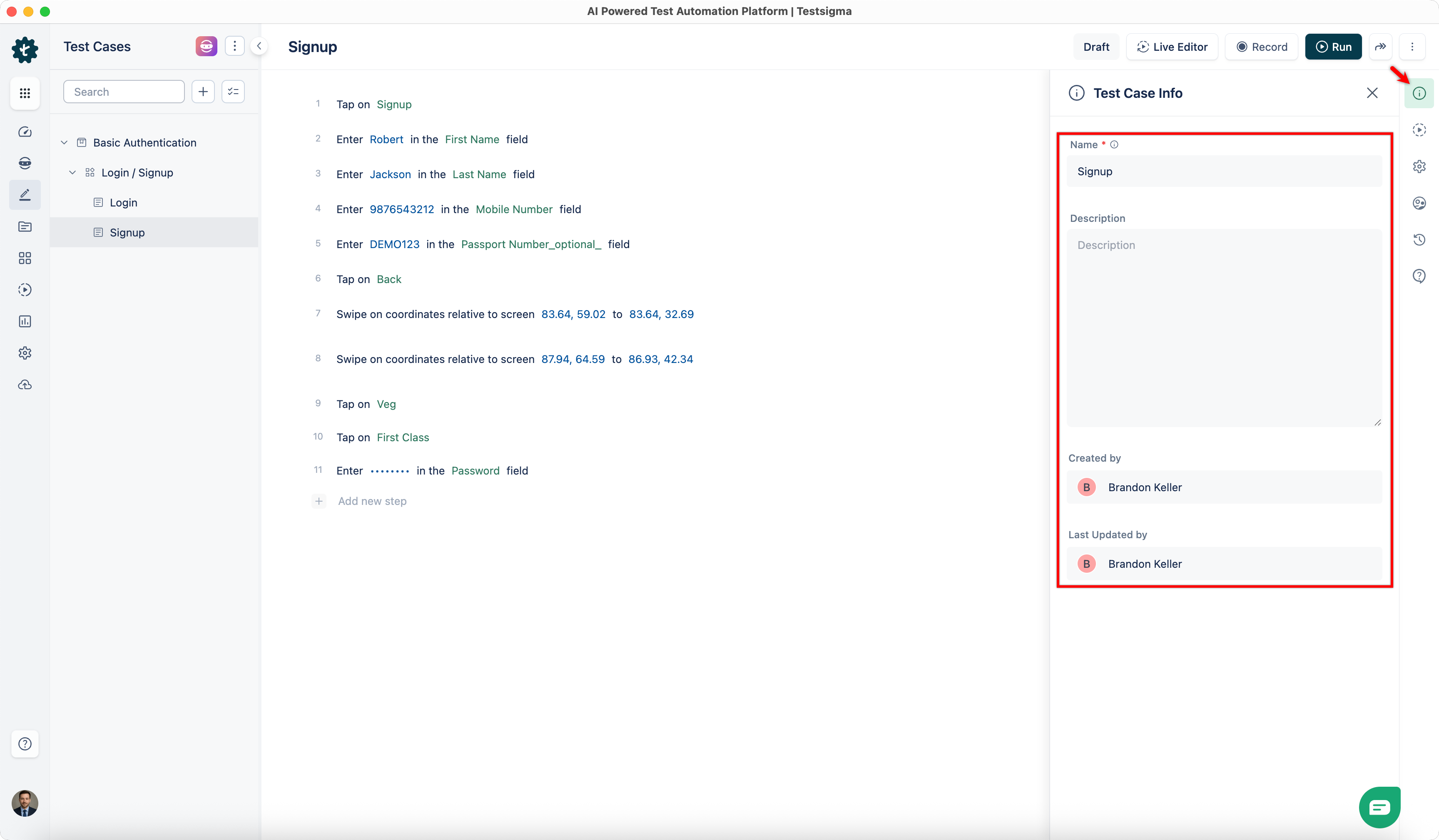
Section titled “Test Case – Advanced Options”1. Test Case Info
Section titled “1. Test Case Info”Click Test Case Info in the right-side navbar to:
- Update the Test Case Name and Description.
- View information about the test case’s creation date and last updated timestamp.
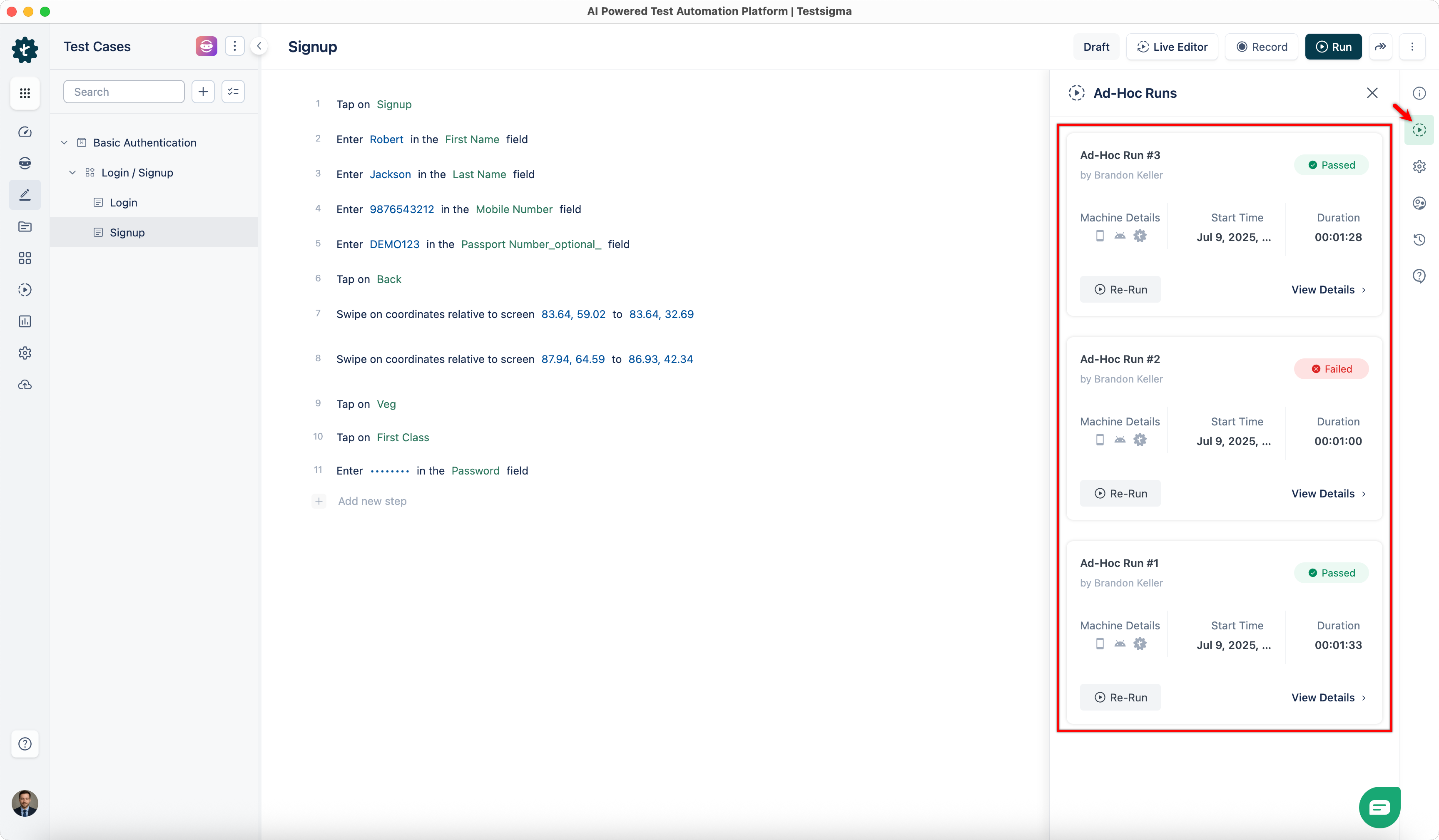
2. Ad-Hoc Runs
Section titled “2. Ad-Hoc Runs”Click Ad-Hoc Runs in the right-side navbar to view the history and details of Ad-Hoc Run results for the test case.
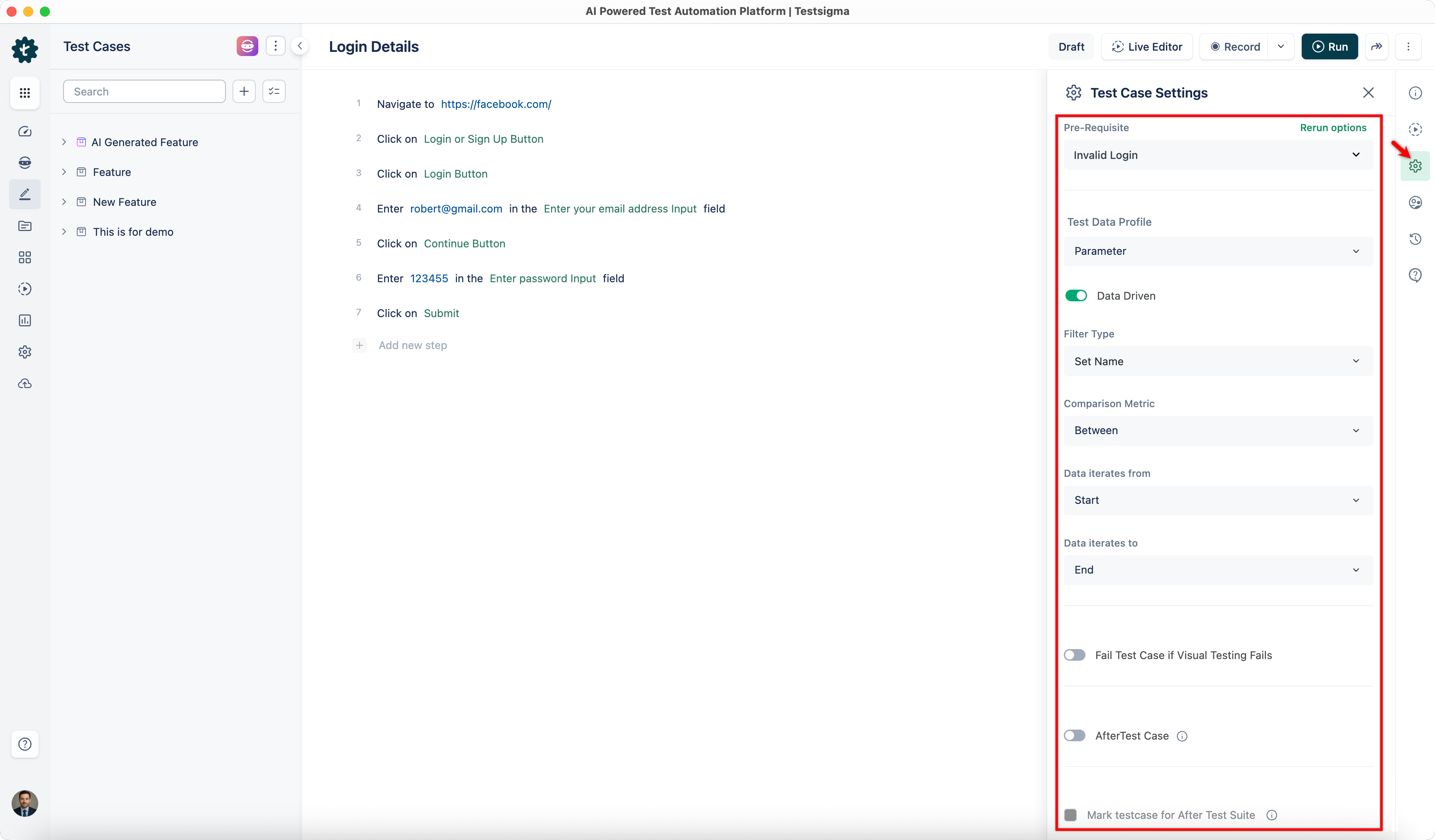
3. Test Case Settings
Section titled “3. Test Case Settings”Click Test Case Settings in the right-side navbar to configure the following:
Pre-Requisites
Section titled “Pre-Requisites”Pre-requisites define any necessary conditions or steps that must be completed before executing a test case, ensuring the test environment is properly set up.
Pre-requisite Execution Options
When executing a test case with pre-requisites, you can choose one of the following execution options:
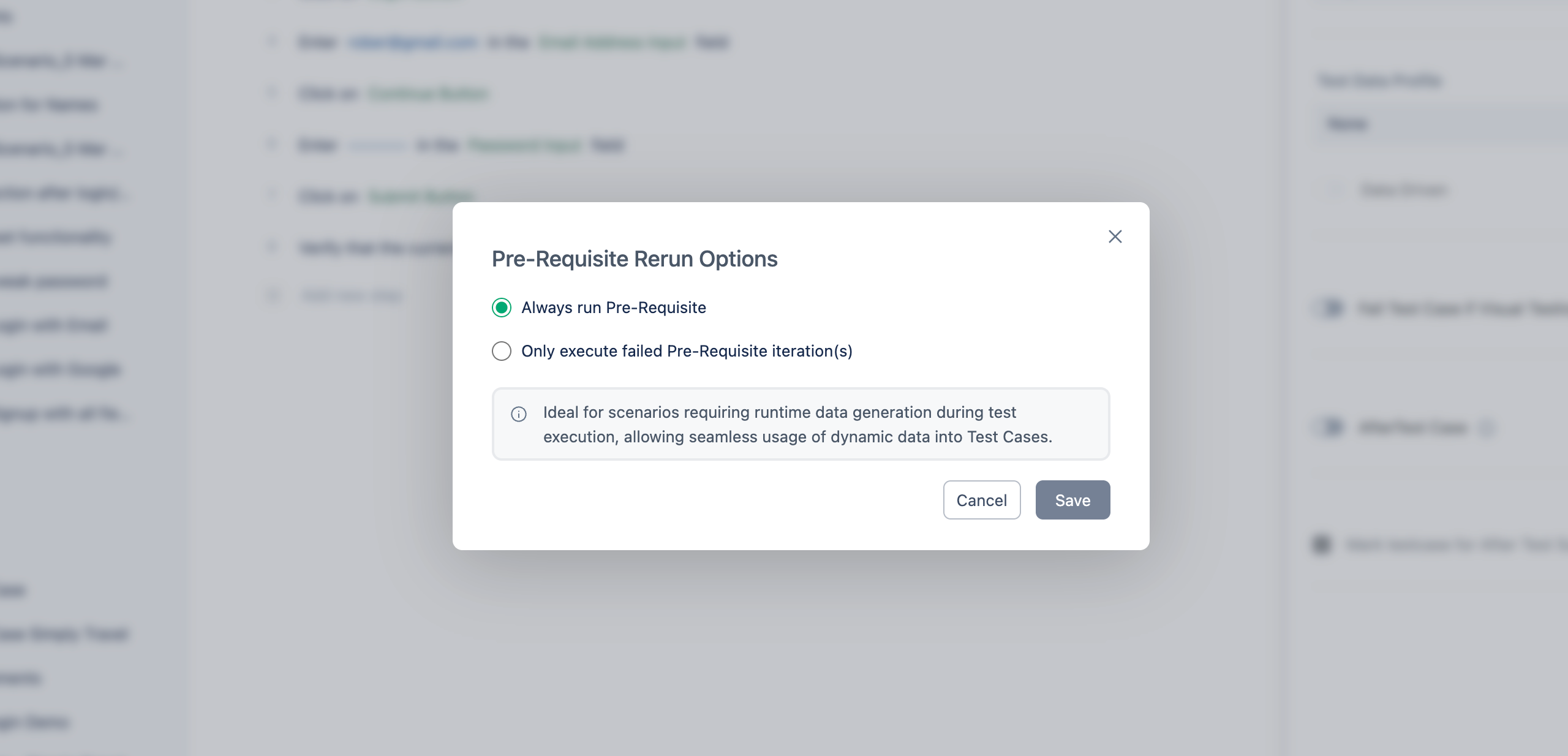
- Always run Pre-requisite – Executes the pre-requisite test case every time the associated test case runs. Useful for scenarios requiring runtime or dynamic data generation.
- Only execute failed Pre-requisite iteration(s) – Reruns only the failed iterations of the pre-requisite. Passed iterations are skipped. Useful when setup is required only once or when rerunning only failed parts improves efficiency.
Test Data Profile
Section titled “Test Data Profile”If parameter-type test data is used in test steps, select the appropriate Test Data Profile here. Refer to the documentation on creating test data profiles for more details.
Test Data Set
Section titled “Test Data Set”Specify the data set within the selected Test Data Profile to be used in the test case.
Data-Driven (Toggle)
Section titled “Data-Driven (Toggle)”Enable this toggle to repeatedly run the same test case with different input data sets from a Test Data Profile. Once enabled, you can customise data sets using the following filters:
- Iteration – Filter sequential data sets using greater than, less than, or between operations.
- Set Name – Filter non-sequential data sets by name using operations such as between, equals, contains, starts with, and ends with.
- Parameter – Filter non-sequential data sets using parameters within the data sets.
Fail Test Case if Visual Testing Fails
Section titled “Fail Test Case if Visual Testing Fails”Enable this option to automatically mark a test case as failed if any visual discrepancies are detected during execution, ensuring UI accuracy and consistency across environments.
After Test Case
Section titled “After Test Case”Define custom steps or tasks to be performed after the test case executes (e.g., clean-up or preparation for subsequent test cases).
- If After Test Fails – Fail the Test Case: Automatically fails the test case if any post-test actions encounter an error.
- If After Test Fails – Show Test Case Result: Displays the test case result even if after-test actions fail, providing complete visibility into test behaviour.
Mark this for AfterTest Suite
Section titled “Mark this for AfterTest Suite”Marks the test case to execute as part of the clean-up or finalisation process after a test suite completes, helping maintain the test environment.
4. Manage Test Case
Section titled “4. Manage Test Case”Click Manage Test Case in the right-side navbar to configure the following:
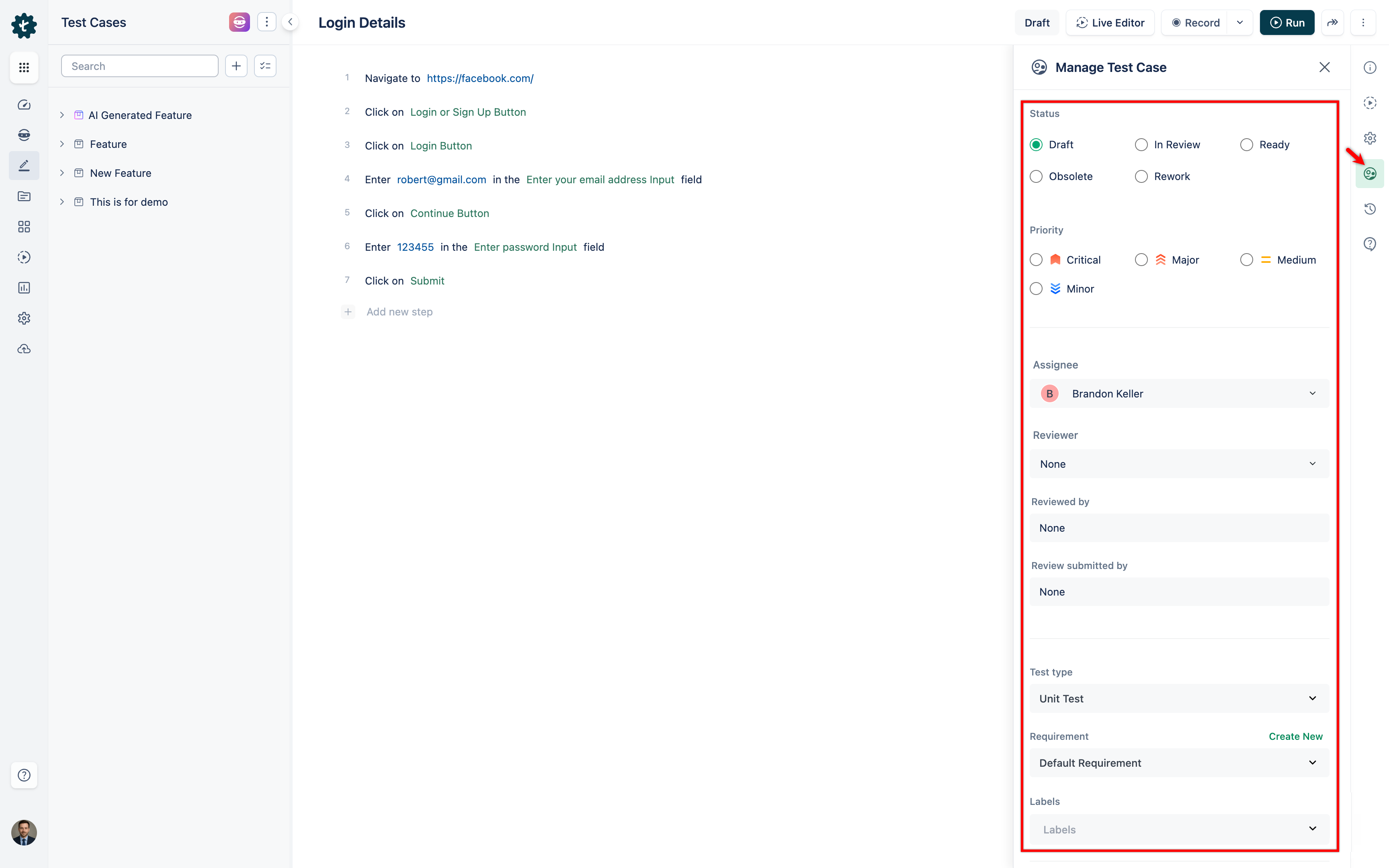
Status
Section titled “Status”- Draft – The test case is in an abstract/work-in-progress mode.
- Review – The test case is under inspection.
- Ready – The test case is active and ready to be executed.
- Obsolete – The test case is no longer valid.
- Rework – The test case needs to be updated.
Priority
Section titled “Priority”- Critical – Highest priority.
- Major – Test case for a major feature.
- Medium – Medium priority.
- Minor – Test case for a minor feature.
Assignee
Section titled “Assignee”Choose a team member to assign to the test case. The assignee will receive notifications regarding test case failures during reviews.
Reviewer
Section titled “Reviewer”Assign a team member to review the test case for accuracy, completeness, and adherence to testing standards.
Test Type
Section titled “Test Type”- Unit Test – Tests individual components in isolation.
- Integration – Tests interaction and compatibility between multiple components.
- Functional – Tests functional requirements against intended specifications.
- Non-functional – Tests performance, usability, security, and similar aspects.
- User Experience – Tests overall usability and interface against user expectations.
Requirement
Section titled “Requirement”Create new requirements and associate them with test cases to establish traceability, ensuring all necessary functionalities are adequately tested.
Labels
Section titled “Labels”Apply labels to categorise test cases based on attributes such as modules, components, or testing phases. Labels facilitate efficient filtering and searching.
5. Activity
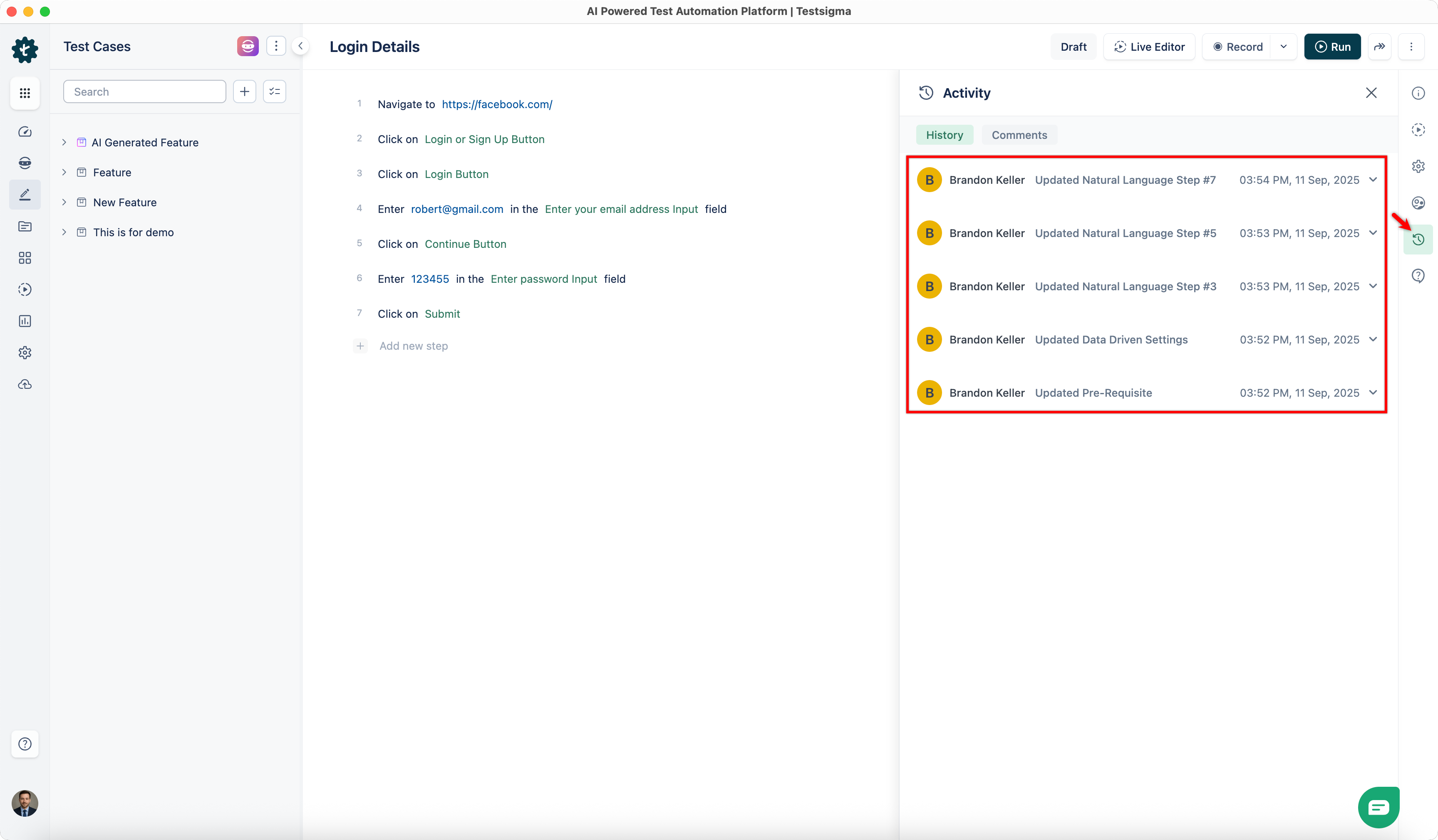
Section titled “5. Activity”Click Activity in the right-side navbar to view the History and Comments associated with the test case.
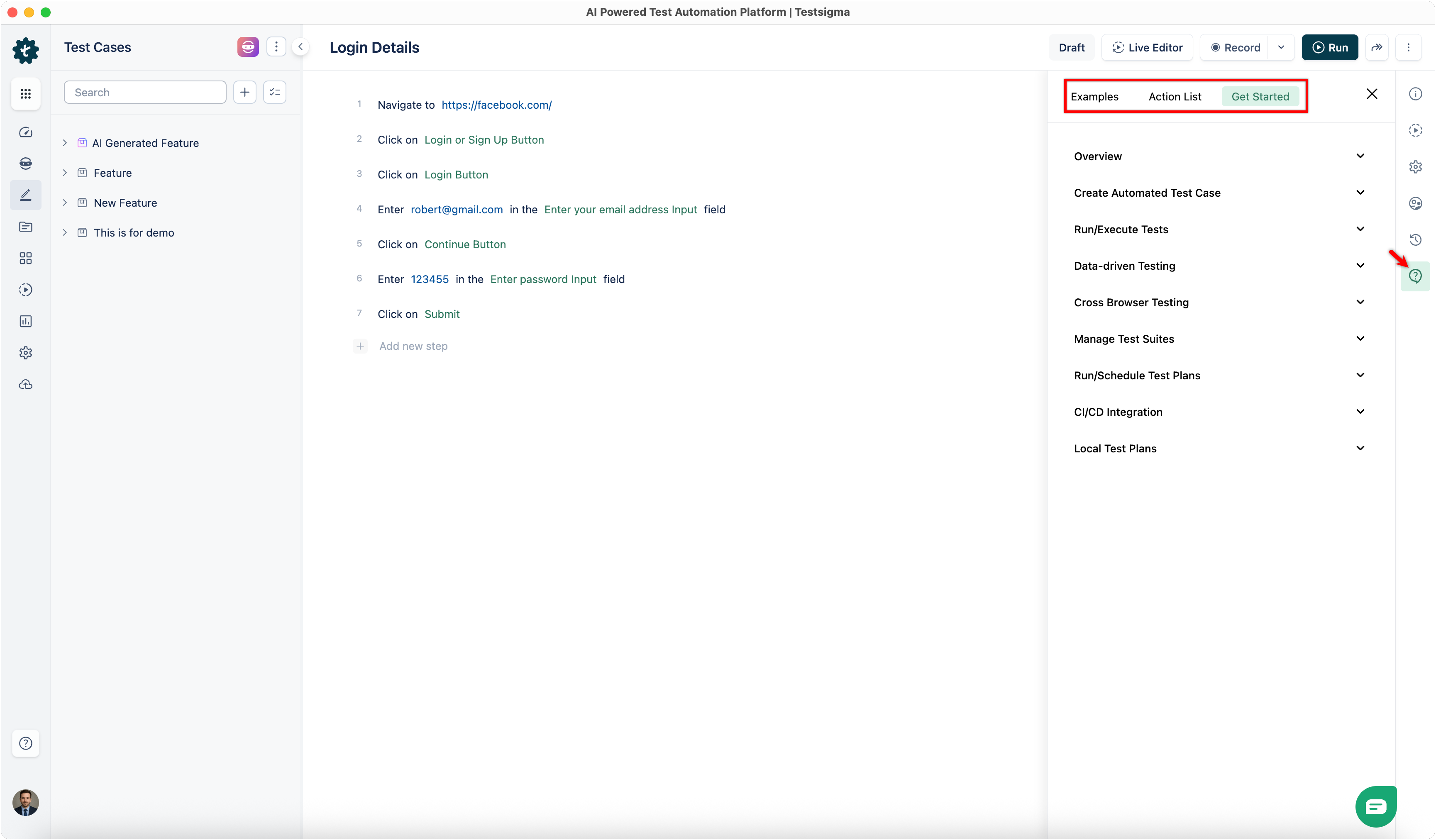
6. Help
Section titled “6. Help”Click Help in the right-side navbar to access Examples, the Action List, and Get Started guides for a general understanding of test cases.