Elements
Create Element Manually
Prerequisites
Before you begin, ensure that you have referred to:
Steps to Create an Element
Section titled “Steps to Create an Element”-
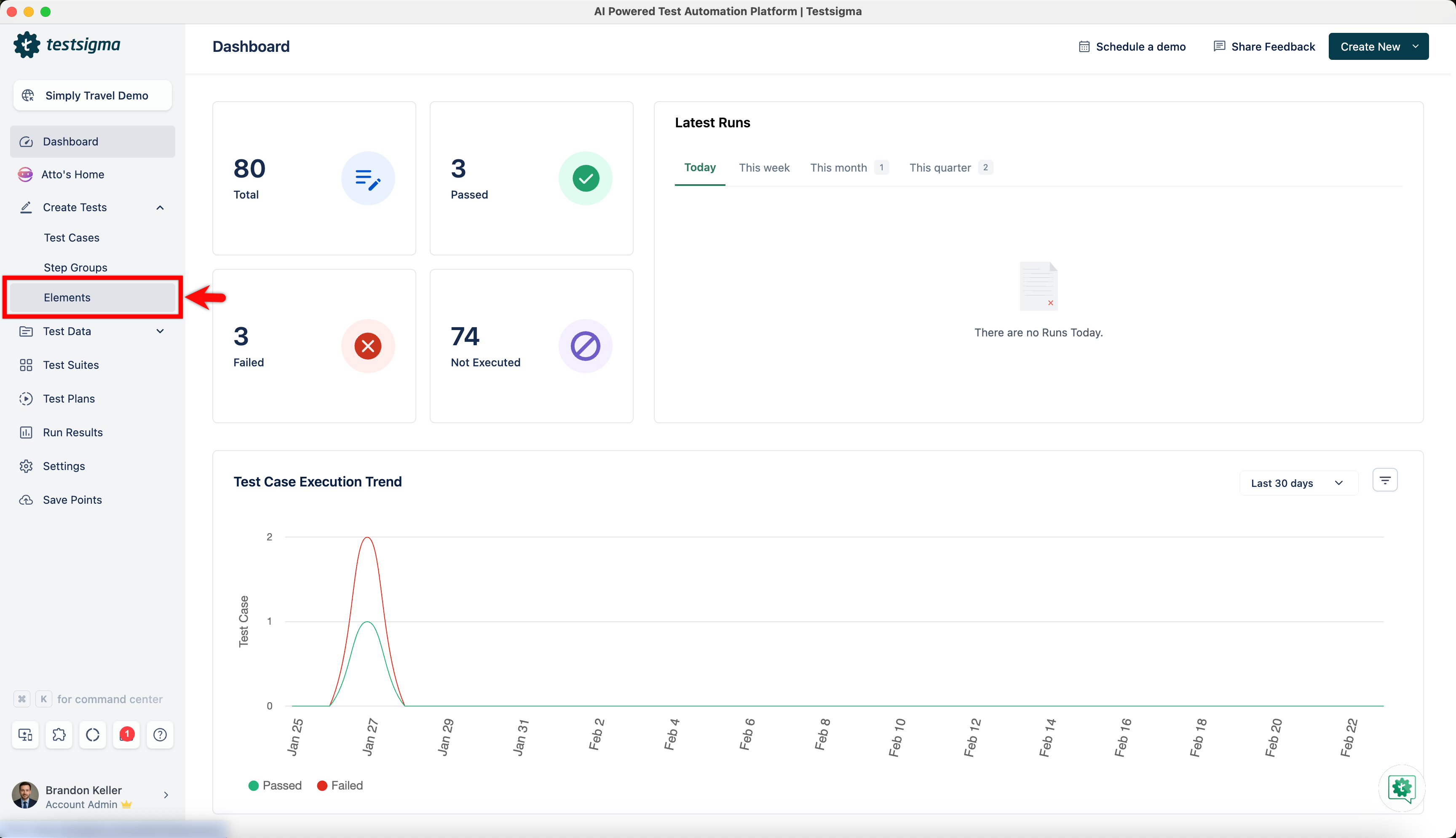
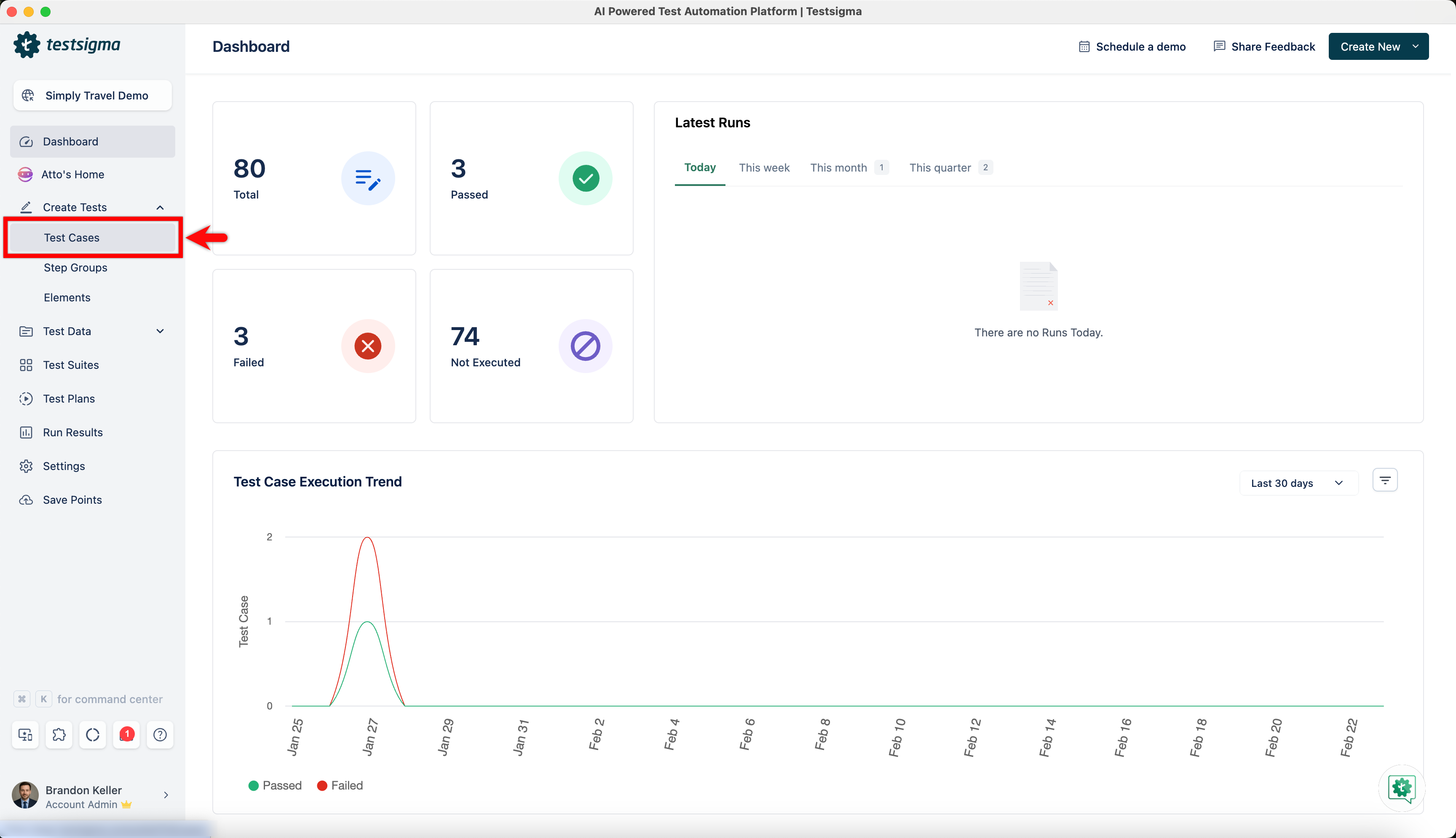
From the left navigation bar, navigate to Create Tests > Elements.
-
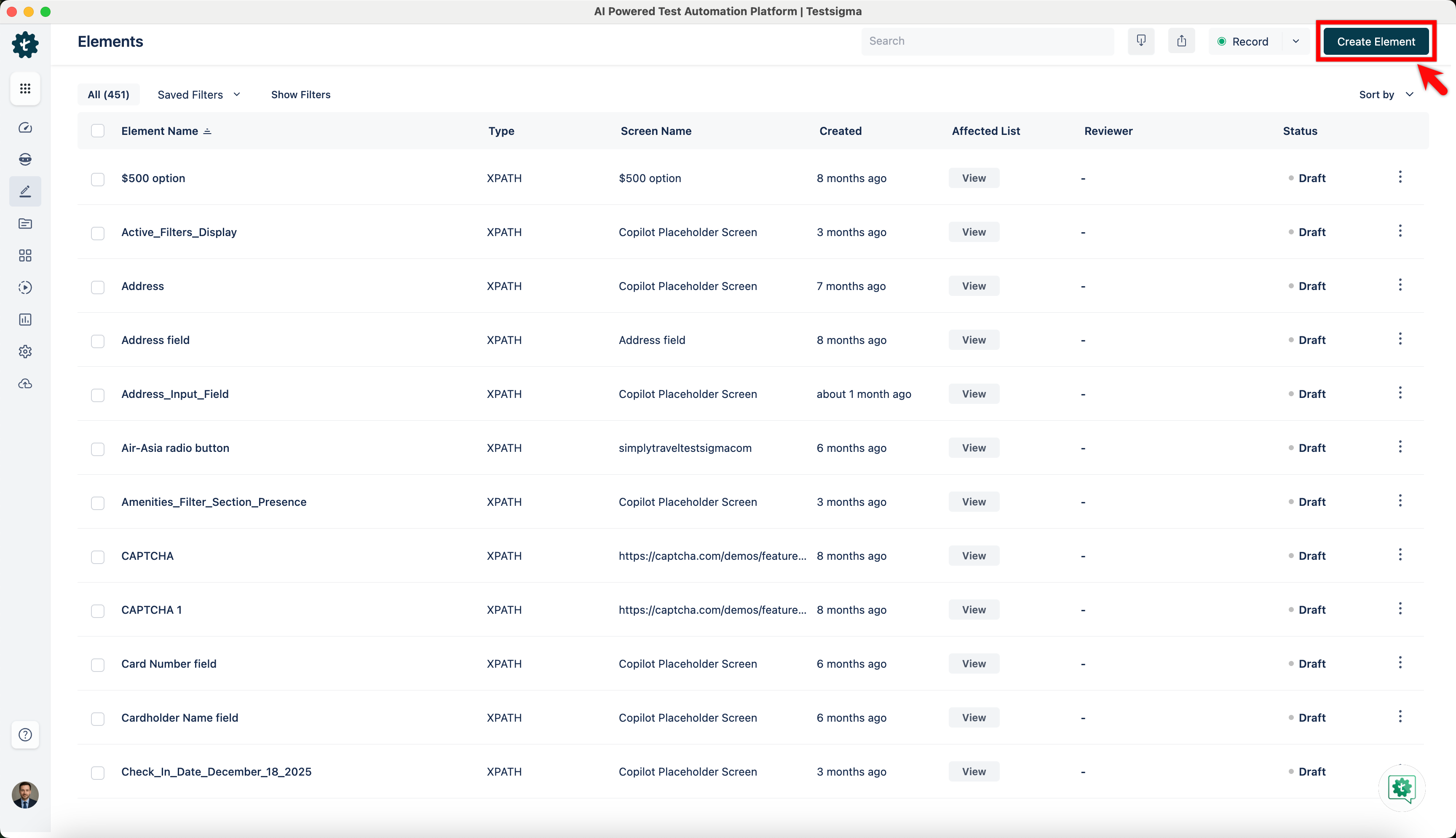
Click on Create Element.
-
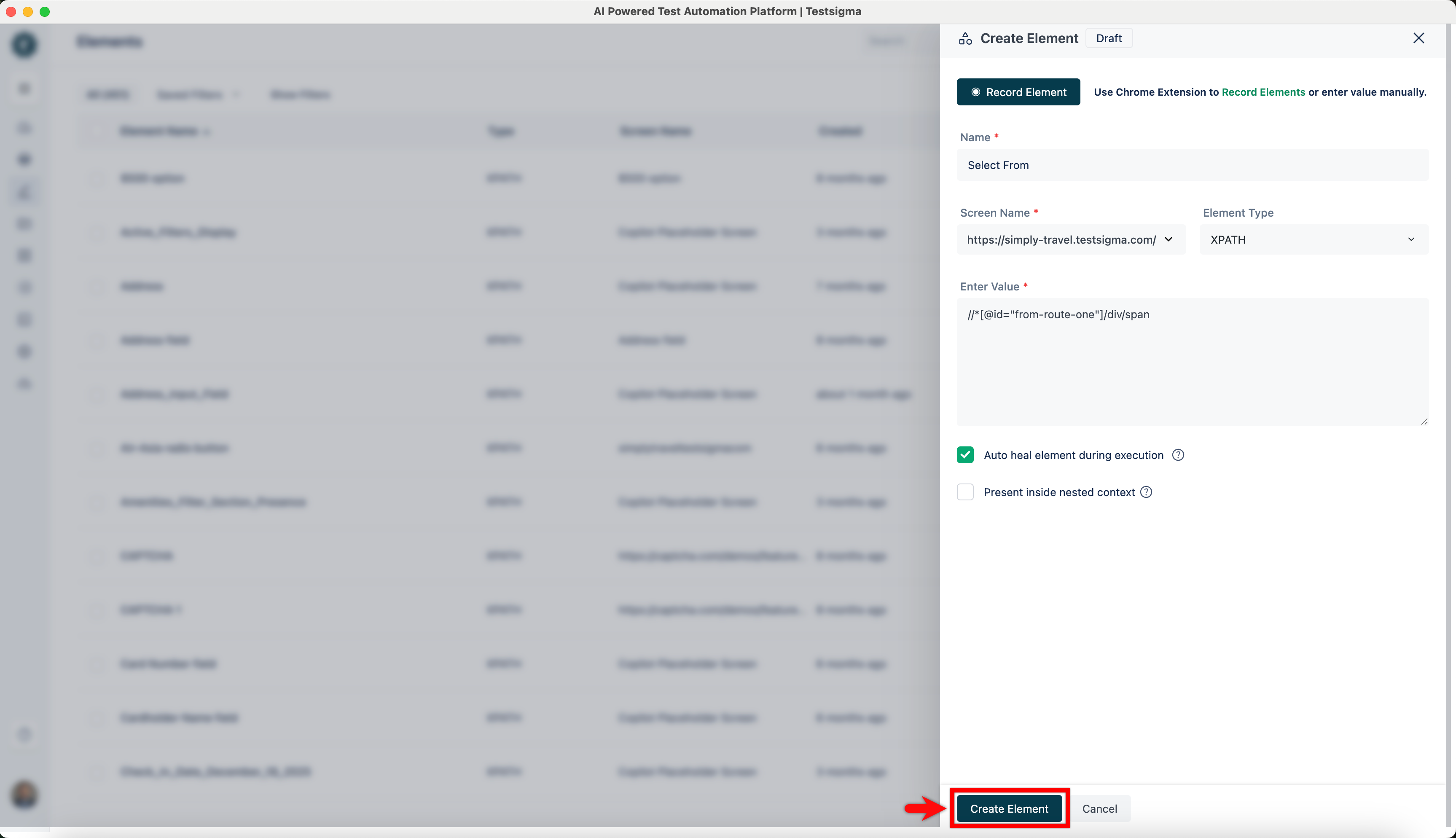
On Create Element overlay, you’ll see the following fields:
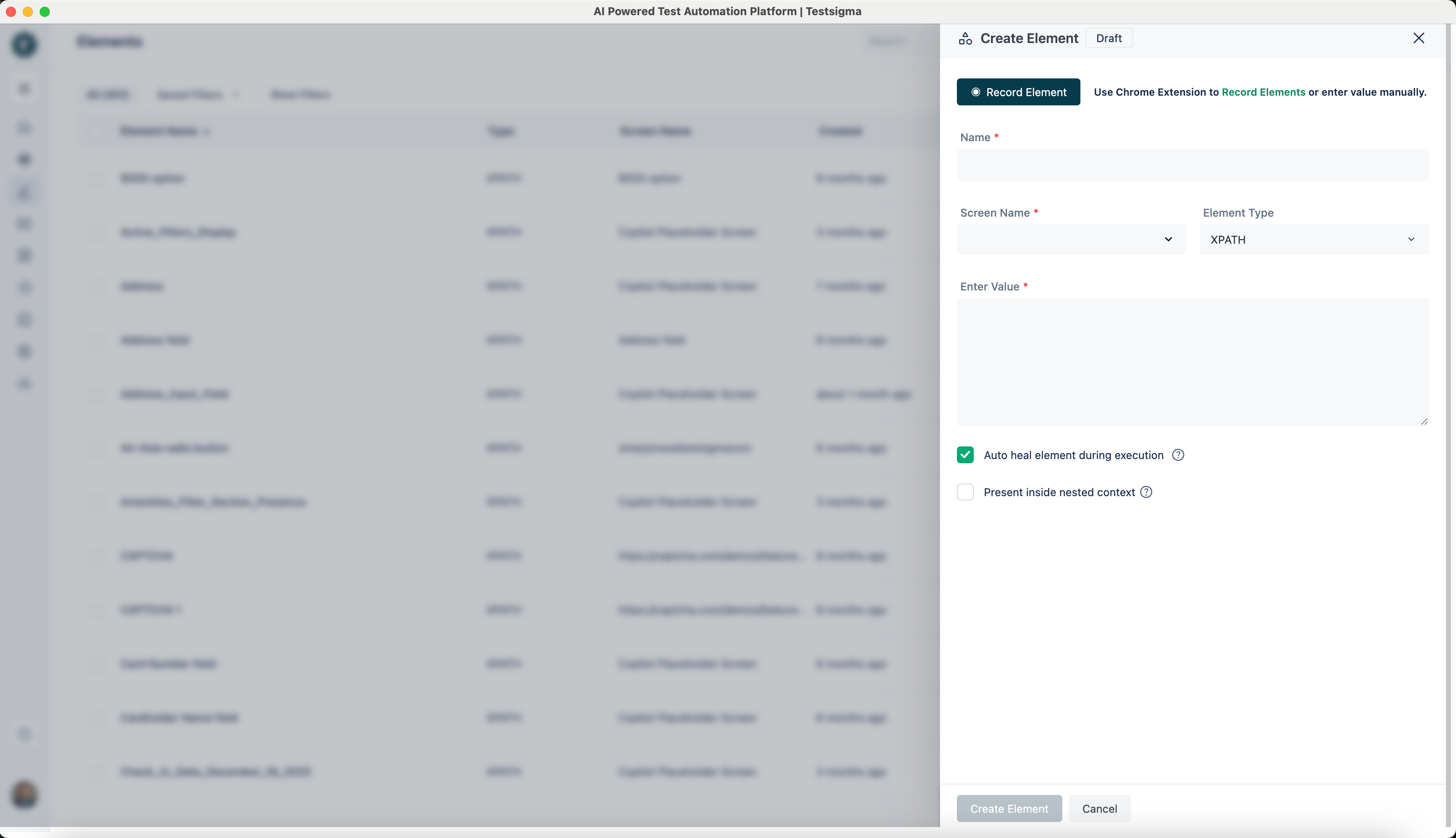
- Name: Enter the name you want to give your element.
- Screen Name: Mention the screen that your element resides on.
- Element Type: There are 5 types of element types supported in Testsigma. This field is a drop-down list; you can select any of them: XPATH, ID, Name, Class Name, or Accessibility ID.
- Enter Value: Enter the value corresponding to the Element Type you selected.
-
Once you have added all the details, click on Create element.
-
The element will be saved in the elements list.
Creating Element While Adding Test Steps
Section titled “Creating Element While Adding Test Steps”-
Navigate to Create Tests > Test Cases, create a new test case or go to a pre-existing test case.
-
Add a test step to the test case that contains an element.
-
Hover over the element and select Create Element from the dropdown.
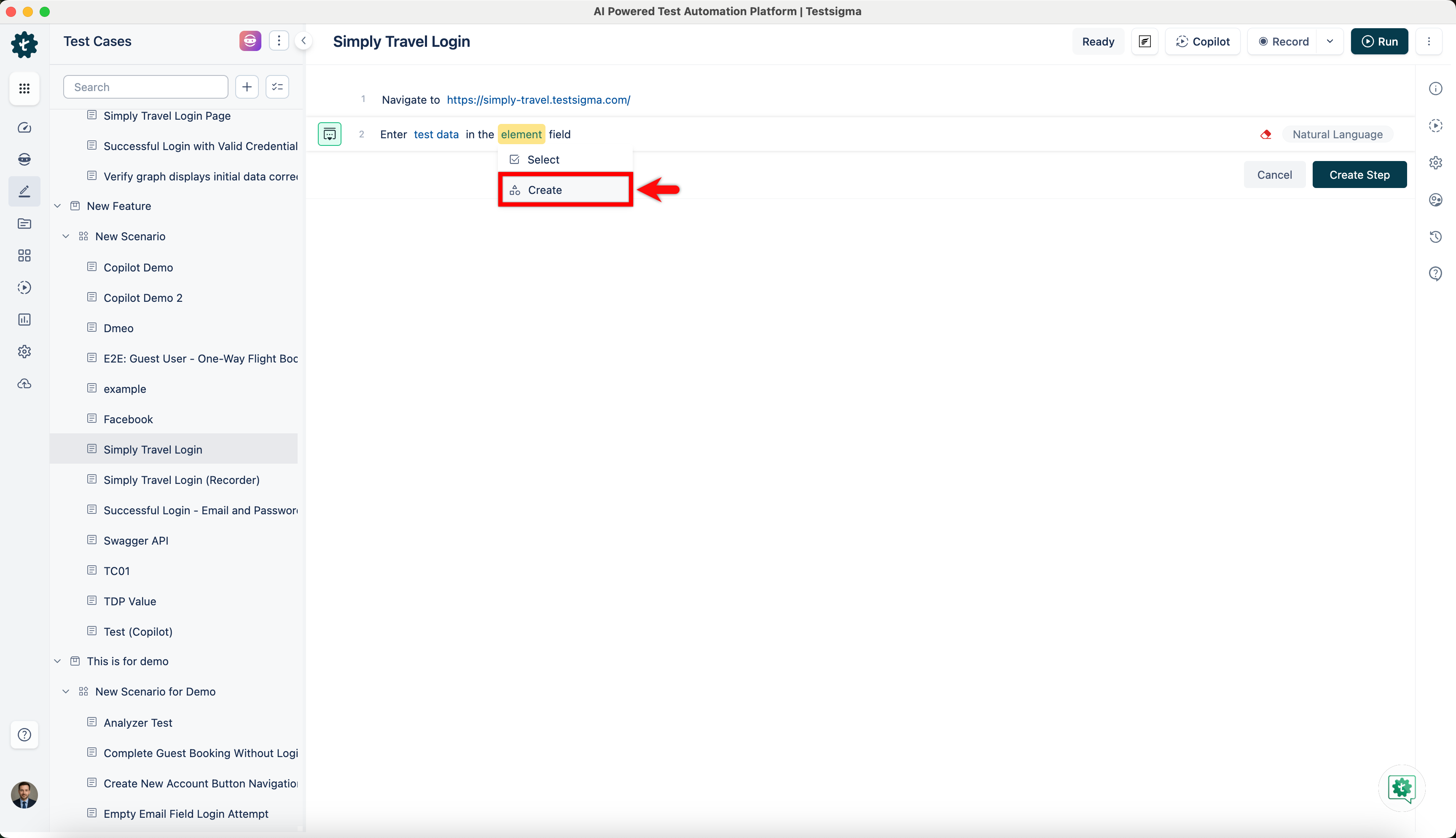
Follow the steps 3-5 from above section to create an element manually.
Updating an Element
Section titled “Updating an Element”-
Navigate to Create Tests > Elements.
-
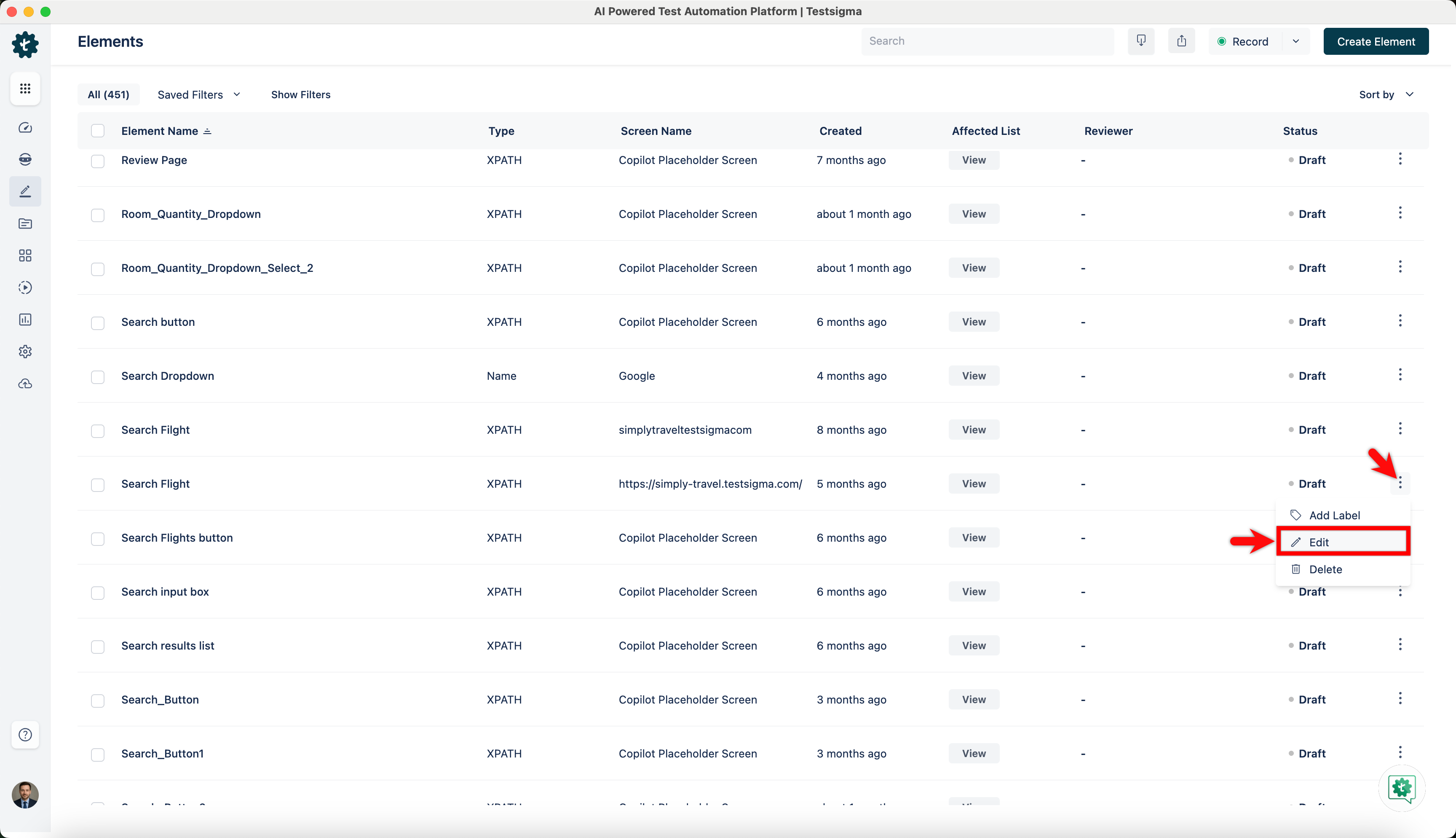
Click the kebab menu next to an element to open a dropdown menu. Click on Edit from the dropdown.
-
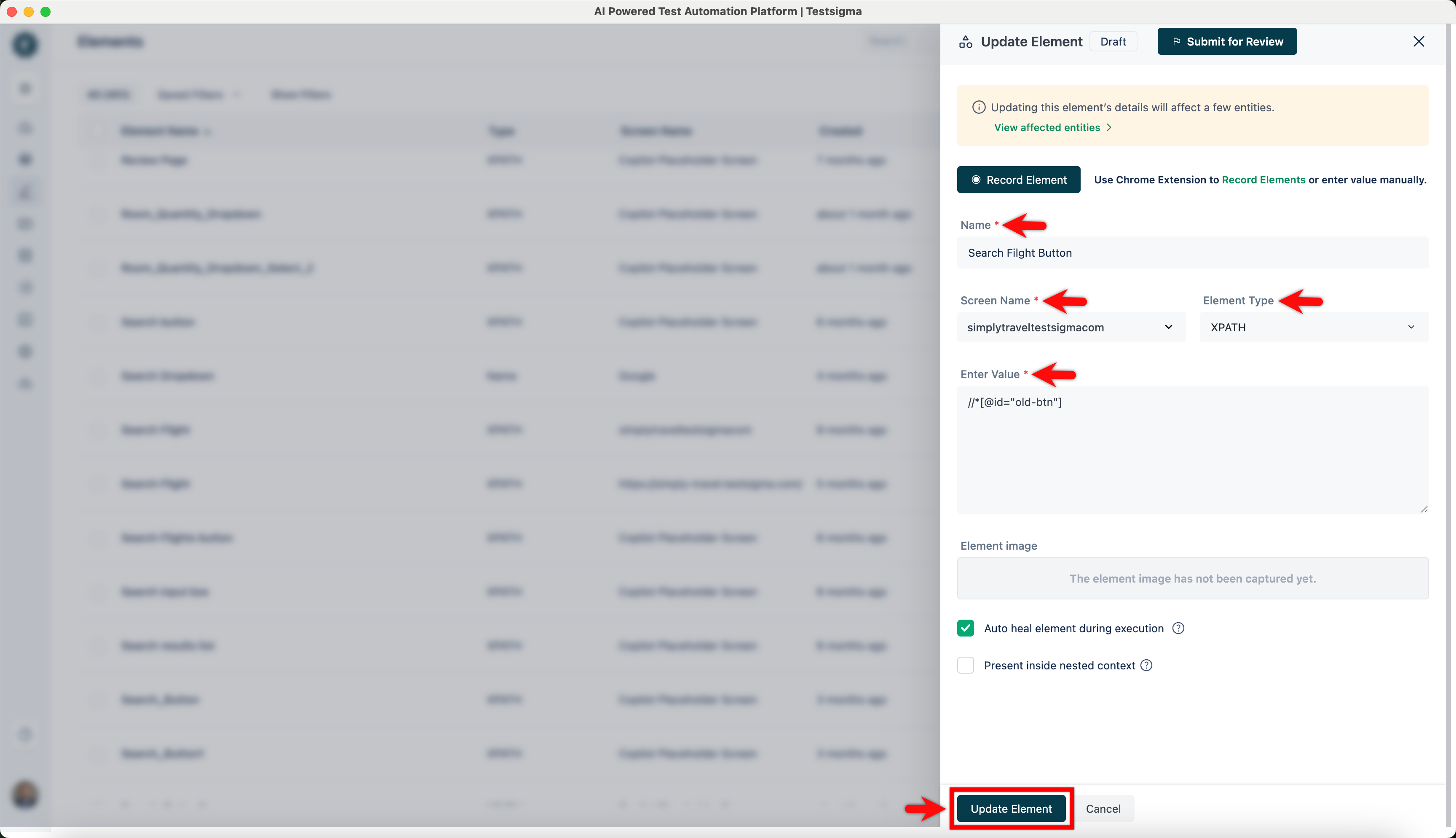
On the Update Element overlay, you can update the Name, Screen Name, Element Type, and Element Value, and click Update.
Updating Multiple Elements
Section titled “Updating Multiple Elements”-
Navigate to Create Tests > Elements.
-
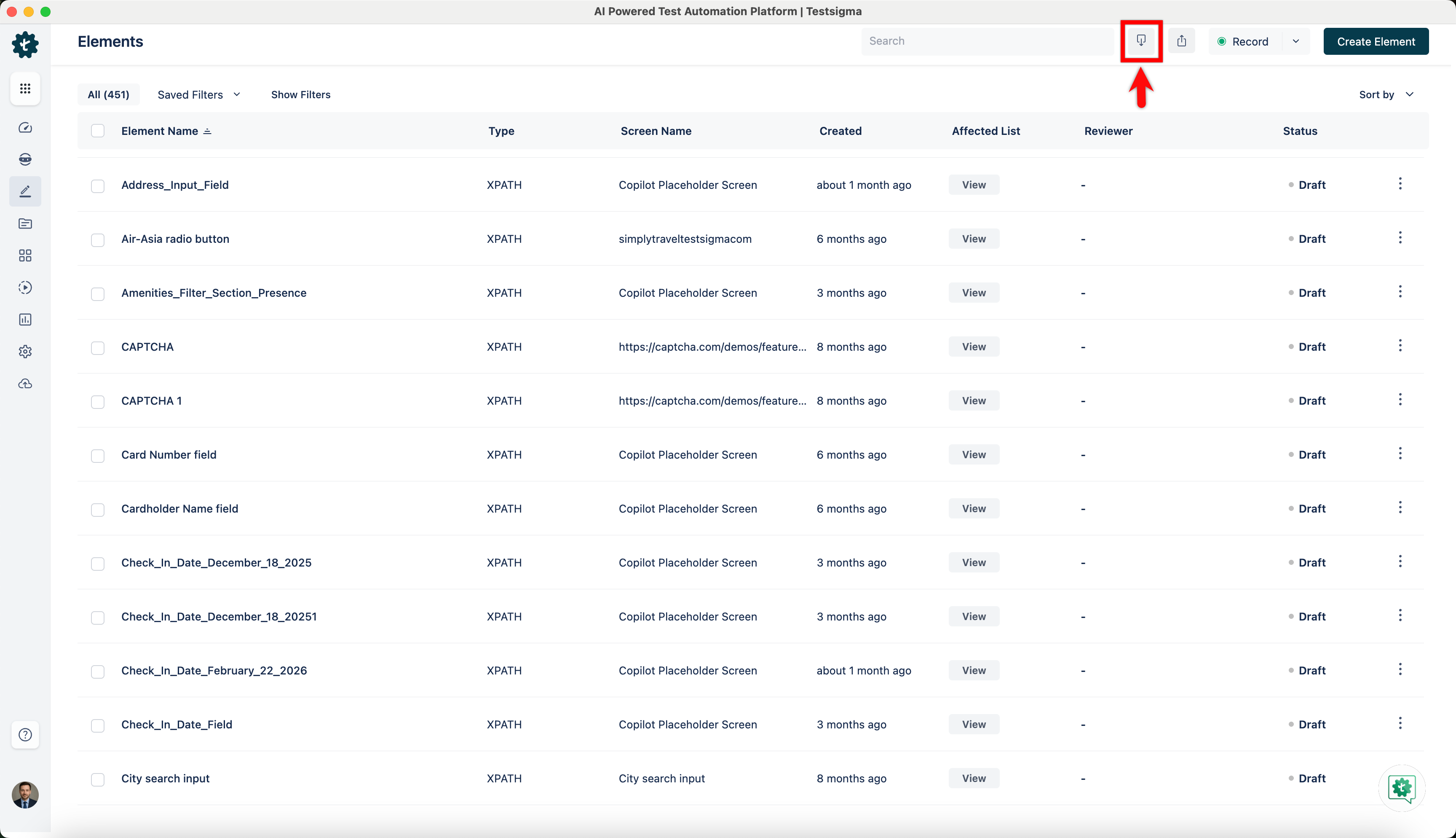
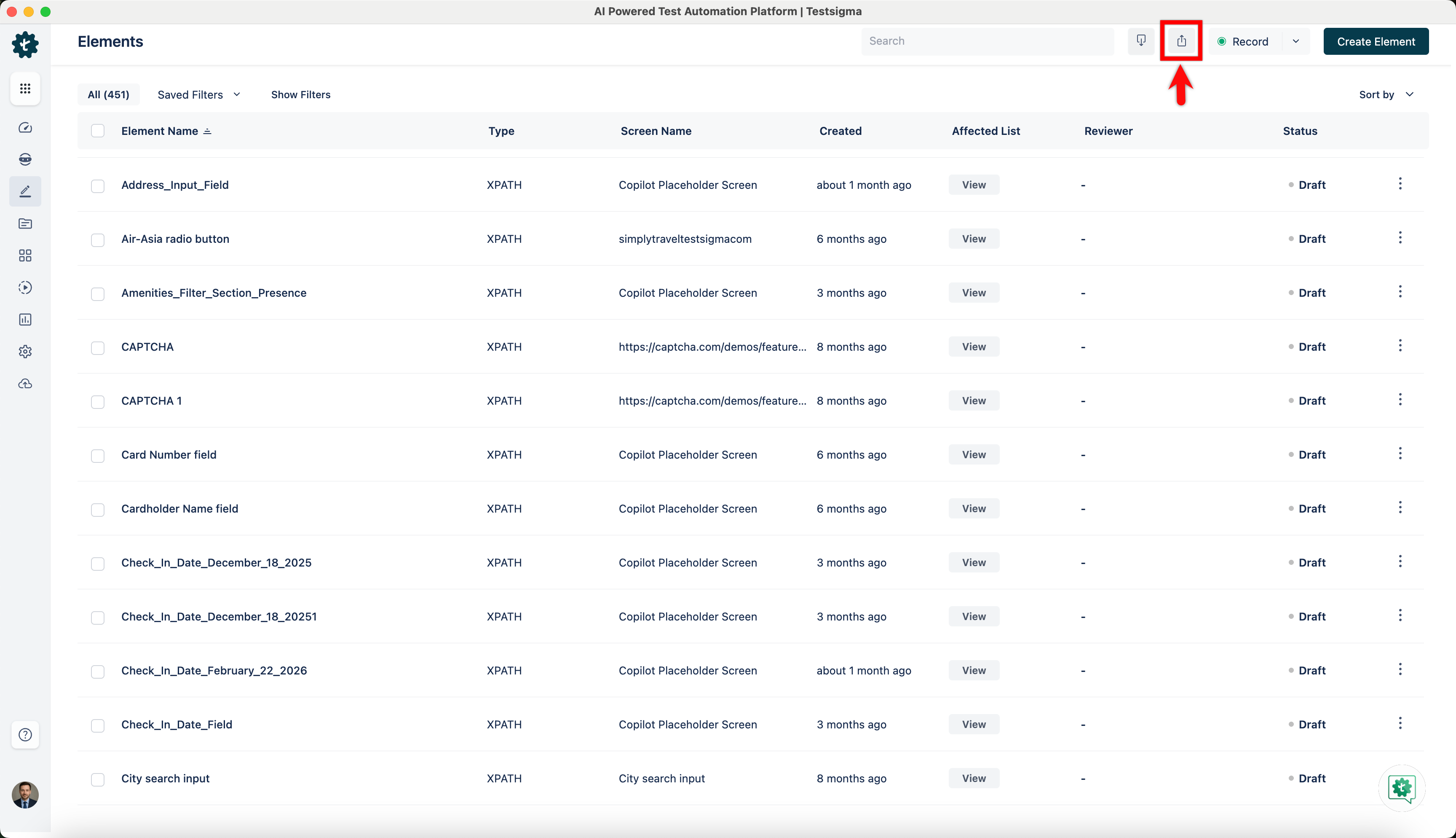
Click on Export to download an XLSX file containing all elements from the project.
-
In the downloaded XLSX file, update the required fields for the required elements.
-
Click on Import and choose the updated XLSX file for import.